
01
Installation alignment
The rotating ring allows bolt-hole orientation to be adjusted during connection, making alignment with the mating component easier.
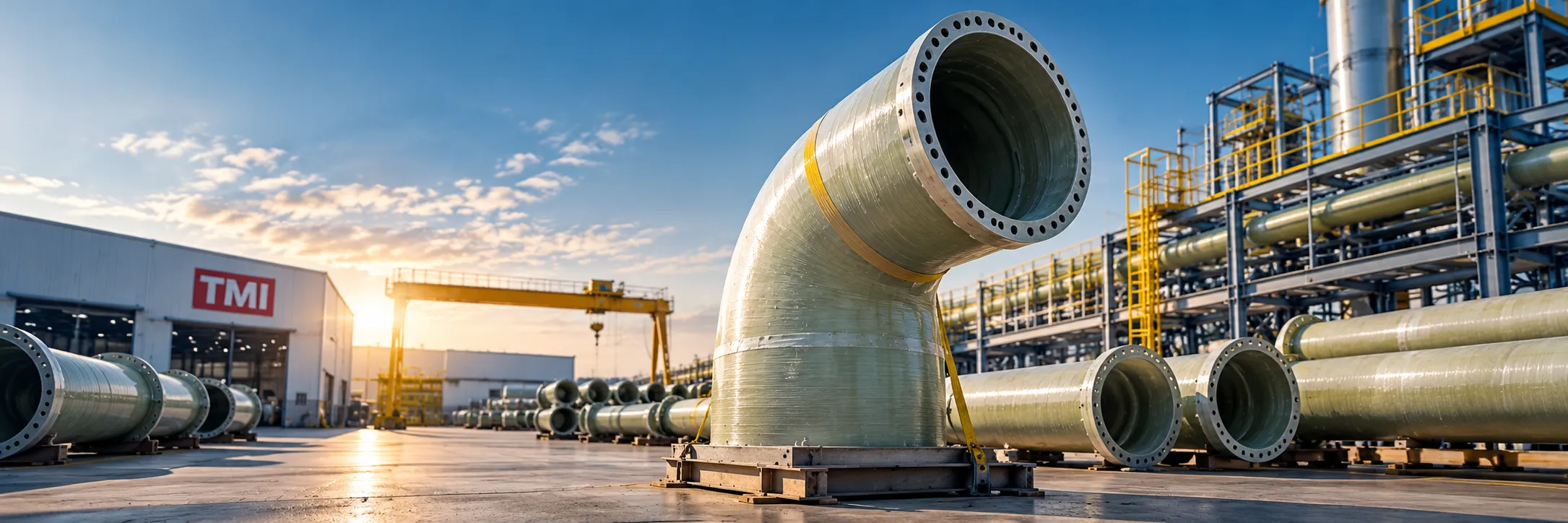
Composite connection components designed to integrate into industrial piping networks and facilitate installation assembly, particularly where corrosion is a project constraint.
In an industrial installation, connection quality depends as much on design as on ease of on-site integration. A loose flange provides flexibility during bolting by allowing the bolt-hole ring to be oriented relative to the mating equipment or pipe.
TMI offers GRP / FRP loose flanges, designed to complete composite piping networks. Their specification must remain consistent with network dimensions, connection interfaces, installation constraints and project service conditions.
This approach is particularly useful when a network must connect piping, tanks, process equipment or other industrial components in an environment where corrosion resistance is required.
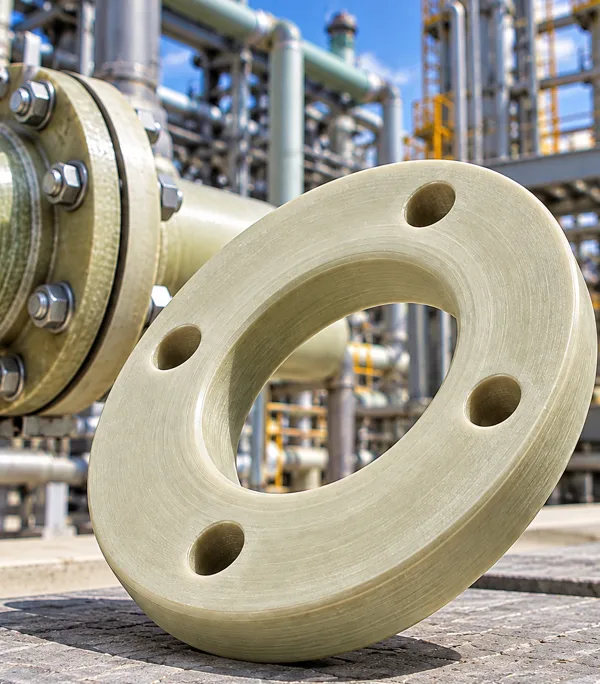
The rotating ring allows bolt-hole orientation to be adjusted during connection, making alignment with the mating component easier.
GRP / FRP is particularly relevant in installations where materials are exposed to corrosive atmospheres or fluids.
The flange can be integrated into an overall solution including pipes, fittings, tanks and other composite equipment.
Dimensions, geometry and interfaces are specified according to the piping, connected equipment and actual operating conditions.
An industrial flange is not an isolated part. It works together with the piping, connected equipment, bolting and sealing system selected for the installation.
During engineering, TMI considers the connection data needed to prepare a solution consistent with the network. This avoids treating the flange as a simple standard fitting when the project requires a specific configuration.
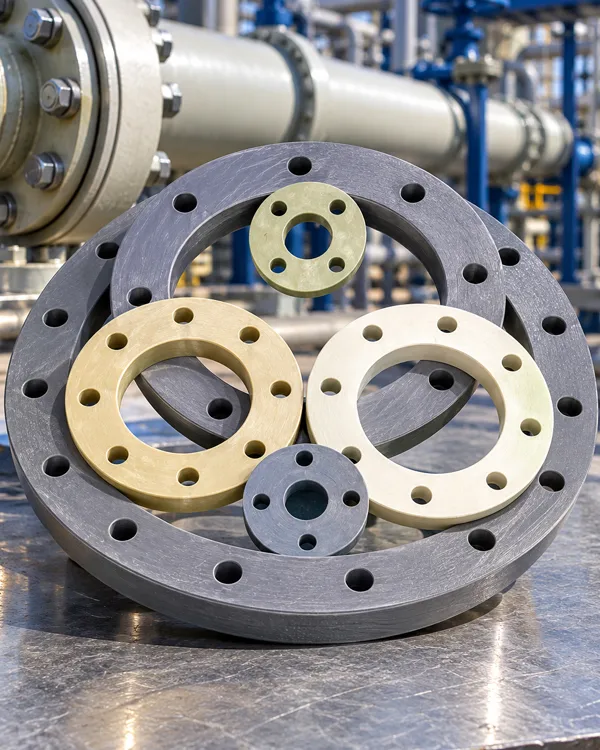
GRP / FRP loose flanges are naturally suited to composite networks used for industrial fluid transport and treatment.
Connection of networks and equipment exposed to corrosive fluids or atmospheres in chemical installations.
Assembly of piping, equipment and structures integrated into treatment, wastewater or industrial-water facilities.
Connections associated with seawater, brine, filtration and cleaning circuits in desalination facilities.
Integration into composite lines when material continuity and effective corrosion control are required.
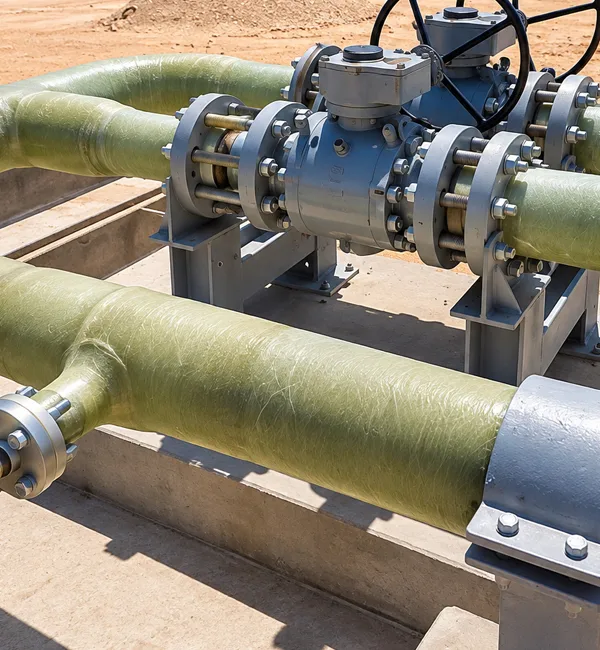
To achieve a reliable and practical assembly, interfaces must be clarified before fabrication.
Record the characteristics of the piping or equipment to be connected.
Validate geometry, drilling pattern and configuration according to the project.
Manufacture the composite flange in line with the selected technical data.
Install it in the network and adjust the loose ring orientation during assembly.
The correct configuration depends on the piping network, connected equipment and service conditions. Dimensions must therefore be validated from actual project data.
It enables a bolted connection while allowing the drilled ring to be oriented. This mobility facilitates alignment with the mating flange during installation.
GRP/FRP combines resin and glass fibres. It is widely used in composite piping networks where corrosion resistance is an installation requirement.
Yes, provided the required information about the network and connection interface is available. Geometric compatibility and service conditions must be checked before fabrication.
The currently available documentation does not define a single standard size range. TMI studies the configuration from project characteristics, network diameter and the interface to be connected.
Yes. Depending on the scope agreed with the customer, TMI can support engineering, composite component fabrication and on-site integration or installation.
Send us the network diameter, connection-interface characteristics and main service conditions. The TMI team can study the configuration suited to your installation.