
01
Chemical resistance
A particularly relevant solution when the network carries aggressive fluids or operates in a corrosive atmosphere.
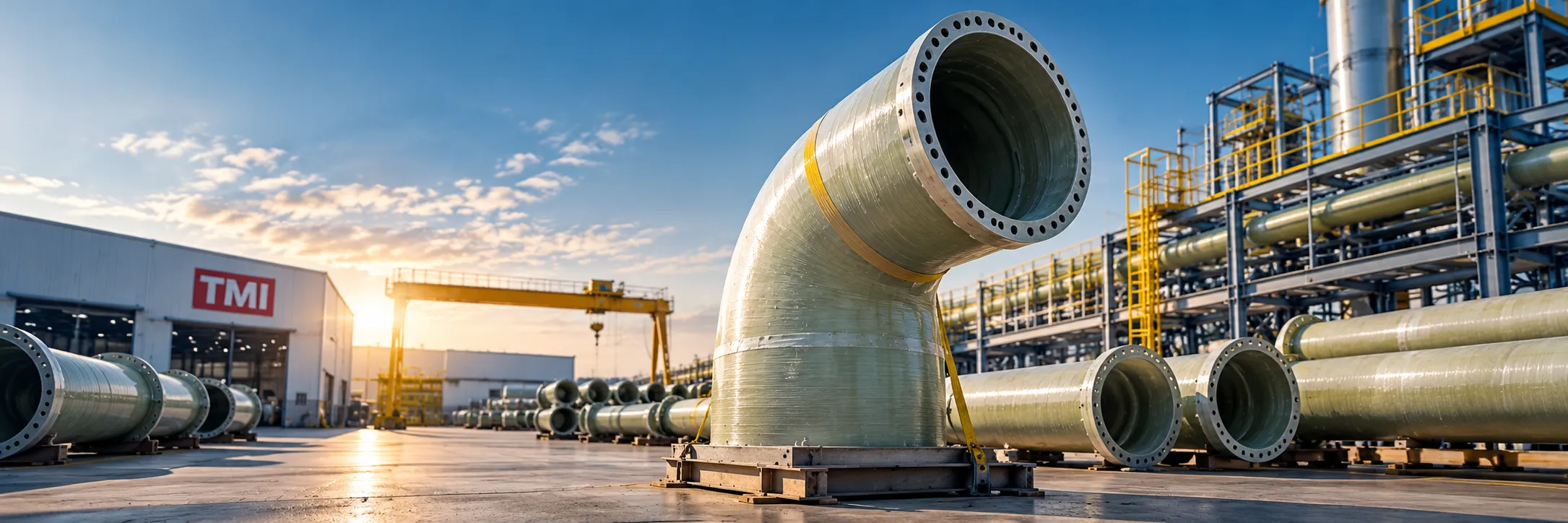
TMI designs and manufactures composite piping solutions for fluid transport, above-ground or buried installations, and environments where corrosion resistance is a major requirement.
GRP / FRP pipes and fittings combine a resin matrix with glass-fibre reinforcement. This construction provides piping components valued for their chemical and mechanical resistance in many industrial applications.
TMI studies project requirements, manufactures the components needed for the piping network and can support their on-site installation. Solutions can be designed for both above-ground and buried networks, depending on application constraints and service conditions.
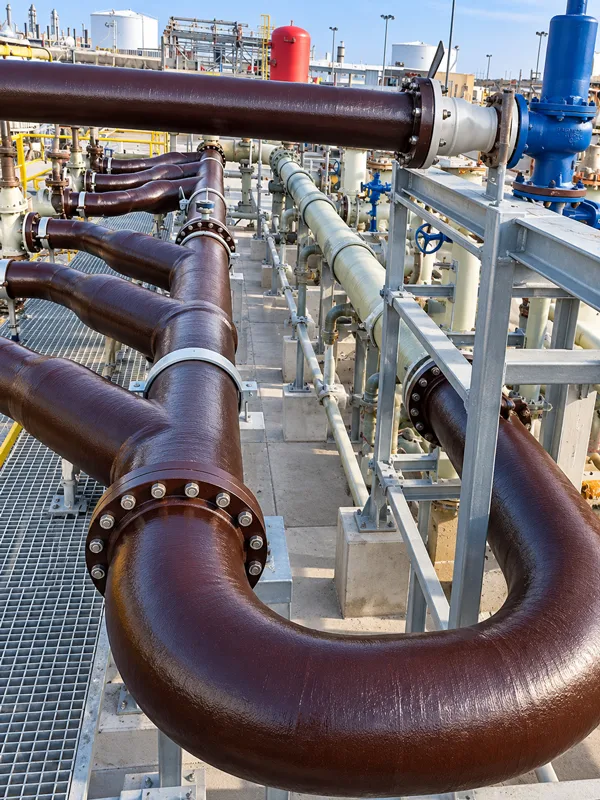
A particularly relevant solution when the network carries aggressive fluids or operates in a corrosive atmosphere.
The resin / glass-fibre combination enables components to be designed for the mechanical loads expected in the installation.
Networks can be engineered for above-ground or buried installation depending on site configuration and project requirements.
With a properly defined configuration, TMI indicates that GRP solutions can achieve a service life of more than 20 years in highly corrosive environments.
Piping reliability depends on more than the pipe itself. Direction changes, branches, connections and transitions must be designed according to the same logic as the rest of the network.
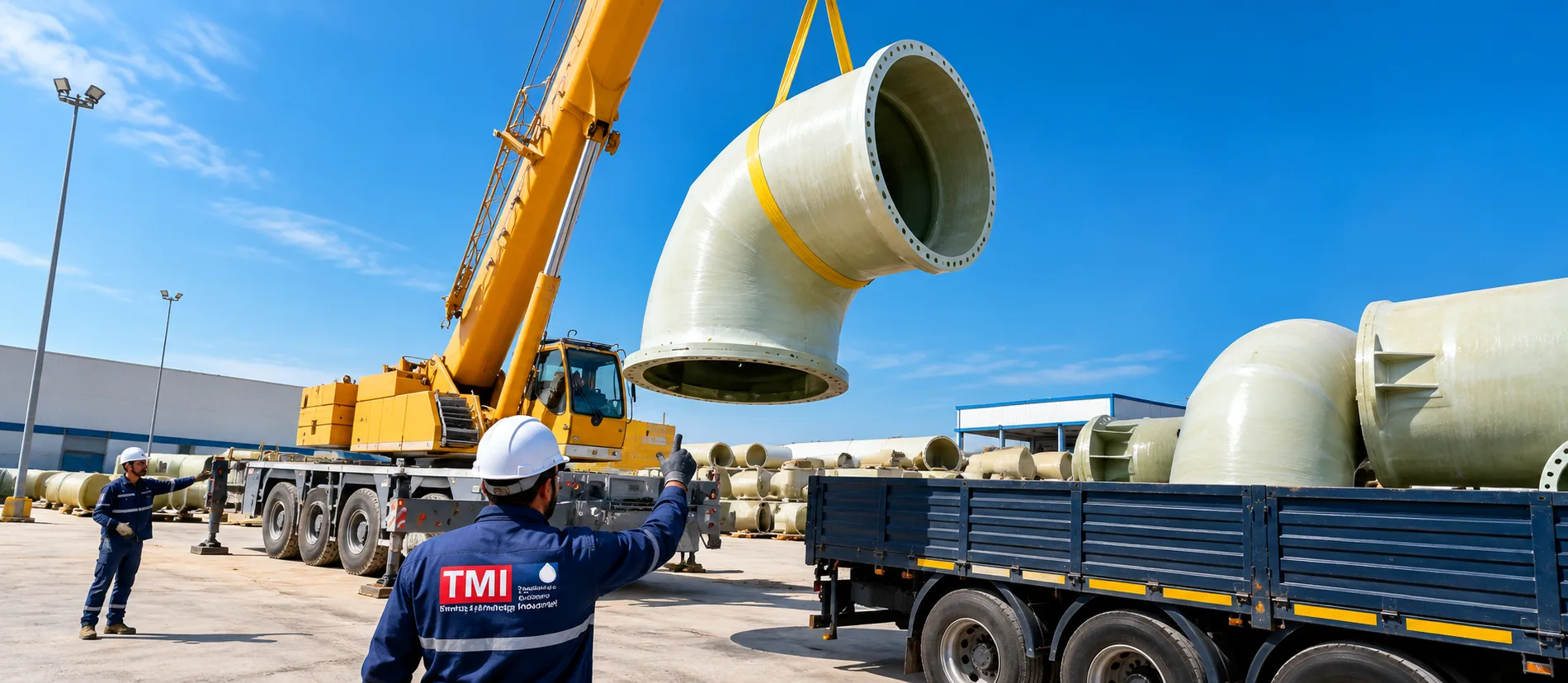
Depending on project needs, TMI manufactures straight pipe sections and a range of composite fittings such as elbows, tees, reducers and connection components. Fabrication is prepared according to network geometry and the constraints defined during engineering.
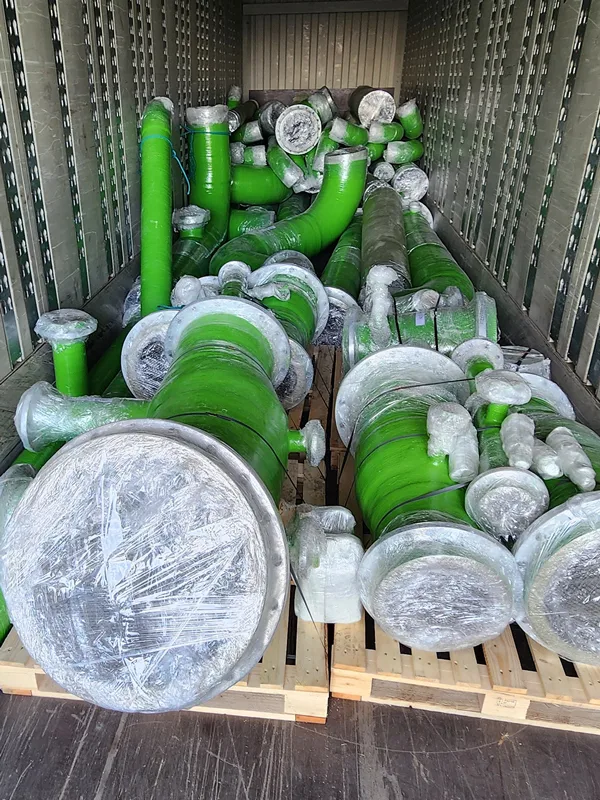
GRP / FRP is well suited to installations where handling corrosive fluids and long-term network durability are important criteria.
Networks intended in particular for the transport of acidic solutions and fluids associated with production processes.
Piping for caustic soda, hypochlorite, brine and other fluids encountered in these units.
Transport and collection piping for treatment facilities and wastewater-related networks.
Intake, filtration and brine networks, along with circuits associated with chemical-cleaning operations.
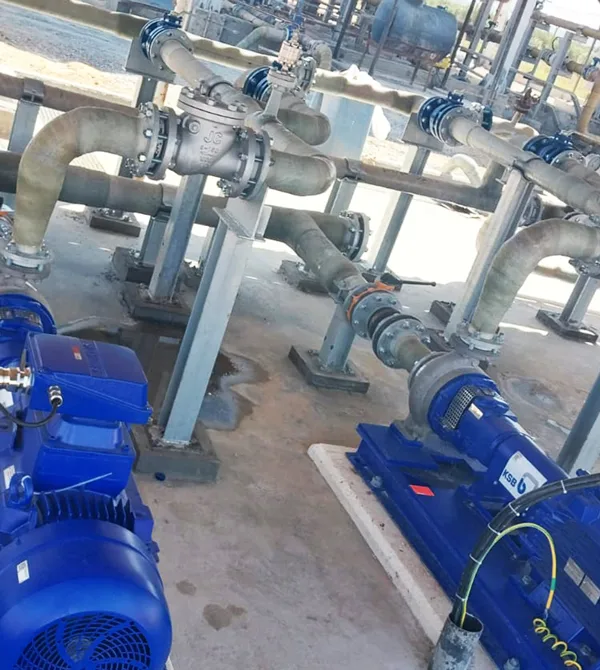
The engineering office, workshop and site teams can work within the same project continuity. This organization helps maintain consistency between engineered geometry, fabricated components and actual installation conditions.
Analysis of the application, piping network and site constraints.
Sizing, drawings and definition of the required components.
Production of composite pipes and fittings.
Preparation, shipment, assembly and on-site installation according to the project.
A few quick answers about the material, its applications and TMI support.
GRP means Glass Reinforced Plastic and FRP means Fibre Reinforced Plastic. These terms refer to composite materials combining a resin matrix with glass-fibre reinforcement.
Yes. TMI solutions can be engineered for above-ground or buried installation, provided design and implementation are adapted to the application constraints.
Its chemical resistance is one of its main advantages for networks exposed to corrosive fluids or atmospheres. The final solution must nevertheless be selected according to actual project conditions.
Yes. TMI manufactures pipes and the various fittings needed to build the network, including direction changes, branches and connection components according to the defined requirements.
Yes. TMI has an engineering office and teams able to work from technical preparation through assembly, shipment and installation at the customer’s site according to the project scope.
Tell us about your application and installation constraints. The TMI team can guide you toward a solution adapted to the project.